Mass at Saint John the Evangelist Church in San Diego, California, on October 7, 2017

https://sdcatholic.org/cardinal-mcelroy/diocesan-synod-on-families/
“Think big.” That’s what Bishop Robert McElroy urged the delegates of a synod on family life to do in 2016. The goal was to identify measures the diocese and parishes could adopt to revitalize and strengthen marriage and families.
Earlier that year, Pope Francis had presented a document called “Amoris Laetitia” (“Joy of Love”). He had invited bishops to figure out ways to better welcome today’s families, respond to their needs and help them to grow in their faith. Bishop McElroy answered the call by convening a synod, one of the few dioceses in the country to do so.
The family synod is the first of four consultations of the faithful the diocese has undertaken in Bishop McElroy’s seven years at the helm. They have engaged thousands of faithful to have a conversation with each other and with their diocese. This is extraordinary given that these diocesan-wide consultations represent a significant investment of resources and time. The last diocesan synod had been held 40 years ago.
The process the bishop used in the family synod would be emblematic of how he would tackle future challenges: Invite as diverse a group as is possible to participate in the consultation, listening to the faithful’s experiences and concerns; encourage a representative committee of lay leaders and clergy to be creative in their ideas to address those concerns, while staying grounded in the Gospel; trust the committee members as they do their work; and commit at the outset to swiftly implementing their proposals, in consultation with pastors and lay leadership.
By the end of the family synod, around 1,000 faithful had participated in sessions at virtually all parishes. The diocese began implementing the 15 recommendations the delegates had developed within two months of the final meeting.
One of them called for the creation of a new department, the Office for Family Life and Spirituality. The three new staff members immediately got to work. They launched a new marriage preparation program called Witness to Love. The office began to work with parishes to help them to develop spiritual formation through the prism of family life. And its staff began to work to support separated and divorced Catholics.
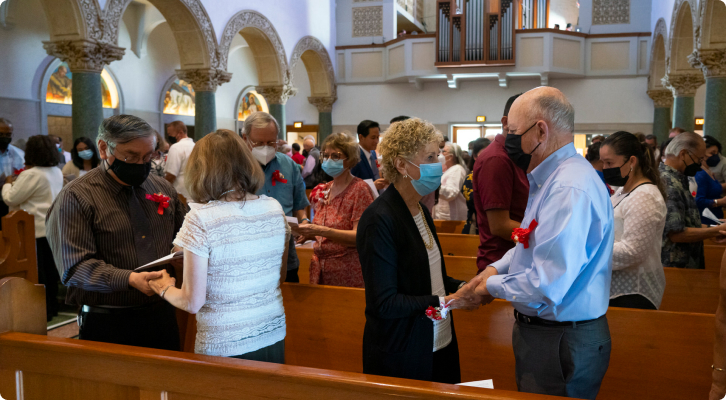
Couples celebrated their love and renewed their vows at anniversary Mass on Feb. 12, 2022 at The Immaculata Church at the University of San Diego. Photo - Howard Lipin
New Office Offered New Pathways to HealTo begin to tend to the wounds modern families sustain, the office developed a series of workshops in English and Spanish called ”Healing Pathways.” They tackled such issues as drug addiction and alcoholism, mental illness and reproductive loss. And they included sessions on how to improve family communication, parenting skills and use of the Internet.
The synod participants identified groups with specific needs hungry for pastoral support. These included young married couples and couples who had been married for some time. The new office developed programming and resources for them, and encouraged parishes to do the same. Gays and their family members made up another group whose members had articulated in the listening sessions that they felt marginalized in the Church. The new office began to support parishes that wanted to launch or strengthen ministries to accompany this Paulist Father John Hurley, a national leader in evangelization strategies, coordinated the family synod. He said that “it was a joy to watch and listen to Bishop” in dialogue with all the participants. “His capacity to open his heart and listen to anyone is the mark of a true shepherd,” he said. “He listened them into existence!”
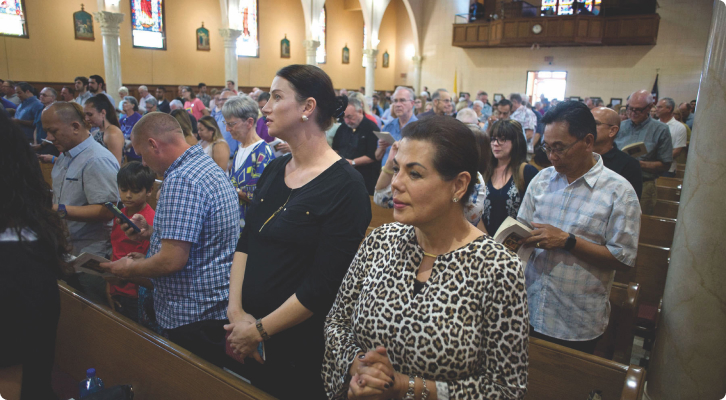
Julia Legaspi, right, and Paloma Mohn, center, participate in Mass at Saint John the Evangelist Church in San Diego, California, on October 7, 2017. Mass was celebrated in honor of the 20th anniversary of "Always Our Children," which is the pastoral message from the U.S. Conference of Catholic Bishops in support of families with LGBT members. Photo - David Maung

El Sínodo transforma el ministerio para las familias de hoy
«Pensad a lo grande». Eso fue lo que el obispo Robert McElroy instó a hacer a los delegados de unsínodo sobrela vidafamiliarcelebrado en 2016. El objetivo era identificar medidas que la diócesis y las parroquias pudieran adoptar para revitalizar y fortalecer el matrimonio y las familias.
A principios de ese año, el papa Francisco había presentado un documento titulado «Amoris Laetitia» («La alegría del amor»). Había invitado a los obispos a buscar formas de acoger mejor a las familias de hoy, responder a sus necesidades y ayudarlas a crecer en la fe. El obispo McElroy respondió a la llamada convocando un sínodo, siendo una de las pocas diócesis del país en hacerlo.
El sínodo familiar es la primera de las cuatro consultas a los fieles que la diócesis ha llevado a cabo durante los siete años de mandato del obispo McElroy. Estas consultas han logrado que miles de fieles entablen un diálogo entre ellos y con su diócesis. Se trata de algo extraordinario, dado que estas consultas a escala diocesana suponen una importante inversión de recursos y tiempo. El último sínodo diocesano se celebró hace 40 años.
El proceso que el obispo siguió en el sínodo sobre la familia sería un ejemplo de cómo abordaría los retos futuros: Invitar a un grupo lo más diverso posible a participar en la consulta, escuchando las experiencias y preocupaciones de los fieles; animar a un comité representativo de líderes laicos y clérigos a ser creativos en sus ideas para abordar esas preocupaciones, sin apartarse del Evangelio; confiar en los miembros del comité mientras realizan su labor; y comprometerse desde el principio a implementar rápidamente sus propuestas, en consulta con los párrocos y los líderes laicos.
Al término del sínodo sobre la familia, alrededor de 1 000 fieles habían participado en las sesiones celebradas en prácticamente todas las parroquias. La diócesis comenzó a poner en práctica las 15 recomendaciones que los delegados habían elaborado en los dos meses siguientes a la reunión final.
Una de ellas proponía la creación de un nuevo departamento, laOficina para Vida y Espiritualidad Familiar. Los tres nuevos miembros del personal se pusieron manos a la obra de inmediato. Lanzaron un nuevo programa de preparación matrimonial llamado «Testigos del Amor». La oficina comenzó a colaborar con las parroquias para ayudarles a desarrollar la formación espiritual desde la perspectiva de la vida familiar. Y su personal empezó a trabajar para apoyar a los católicos separados y divorciados.
Varias parejas celebraron su amor y renovaron sus votos en la misa de aniversario celebrada el 12 de febrero de 2022 en la iglesia de la Inmaculada, en la Universidad de San Diego. Foto: Howard Lipin
La nueva oficina ofrece nuevas vías para la recuperación
Para empezar a atender las heridas que sufren las familias modernas, la oficina organizó una serie de talleres en inglés y español denominados«Healing Pathways». En ellos se abordaron temas como la adicción a las drogas y el alcoholismo, las enfermedades mentales y las pérdidas reproductivas. Además, se incluyeron sesiones sobre cómo mejorar la comunicación familiar, las habilidades parentales y el uso de Internet.
Los participantes en el sínodo identificaron grupos con necesidades específicas que demandaban apoyo pastoral. Entre ellos se encontraban las parejas jóvenes recién casadas y las parejas que llevaban ya algún tiempo casadas. La nueva oficina elaboró programas y recursos para ellos, y animó a las parroquias a hacer lo mismo. Las personas homosexuales y sus familiares constituían otro grupo cuyos miembros habían expresado en las sesiones de escucha que se sentían marginados en la Iglesia. La nueva oficina comenzó a apoyar a las parroquias que deseaban poner en marcha o reforzar los ministerios destinados a acompañar a esta comunidad.
El padre paulista John Hurley, una figura destacada a nivel nacional en el ámbito de las estrategias de evangelización, coordinó el sínodo sobre la familia. Afirmó que «fue una alegría ver y escuchar al obispo» dialogando con todos los participantes. «Su capacidad para abrir su corazón y escuchar a cualquiera es el sello distintivo de un verdadero pastor», señaló.
«¡Les dio vida con su escucha!»
Julia Legaspi, a la derecha, y Paloma Mohn, en el centro, asisten a la misa en la iglesia de San Juan Evangelista, en San Diego (California), el 7 de octubre de 2017. La misa se celebró en honor al vigésimo aniversario de «Always Our Children» («Siempre nuestros hijos»), el mensaje pastoral de la Conferencia Episcopal de Estados Unidos en apoyo a las familias con miembros LGBT. Foto: David Maung


Comments
Post a Comment